
For cannabis brands, the cstructure of a vape device affects far more than how oil enters the reservoir. It influences production speed, filling accuracy, capping workflow, oil loss, sealing consistency, and the amount of handling required before finished units can move into packaging. Top-fill hardware has become increasingly common because it can simplify production, but bottom-fill structures still appear in established device platforms. The right choice depends on the oil, filling equipment, order volume, device architecture, and production workflow. Before selecting cannabis vape hardware, buyers should understand how the filling method will behave once thousands of units—not just a few samples—move through the line.
What Is the Difference Between Top-Fill and Bottom-Fill Vape Hardware?
The basic difference is the direction from which the reservoir is filled and subsequently sealed. With a top-fill structure, oil is introduced through an opening near the upper section of the reservoir before the mouthpiece or cap is installed. Bottom-fill hardware requires access from the lower portion of the device, followed by installation or sealing of the bottom assembly.
The distinction sounds simple, but it changes how operators hold the device, where filling equipment needs access, and which components are handled after oil enters the reservoir.
Top-Fill Designs Simplify Access to the Oil Chamber
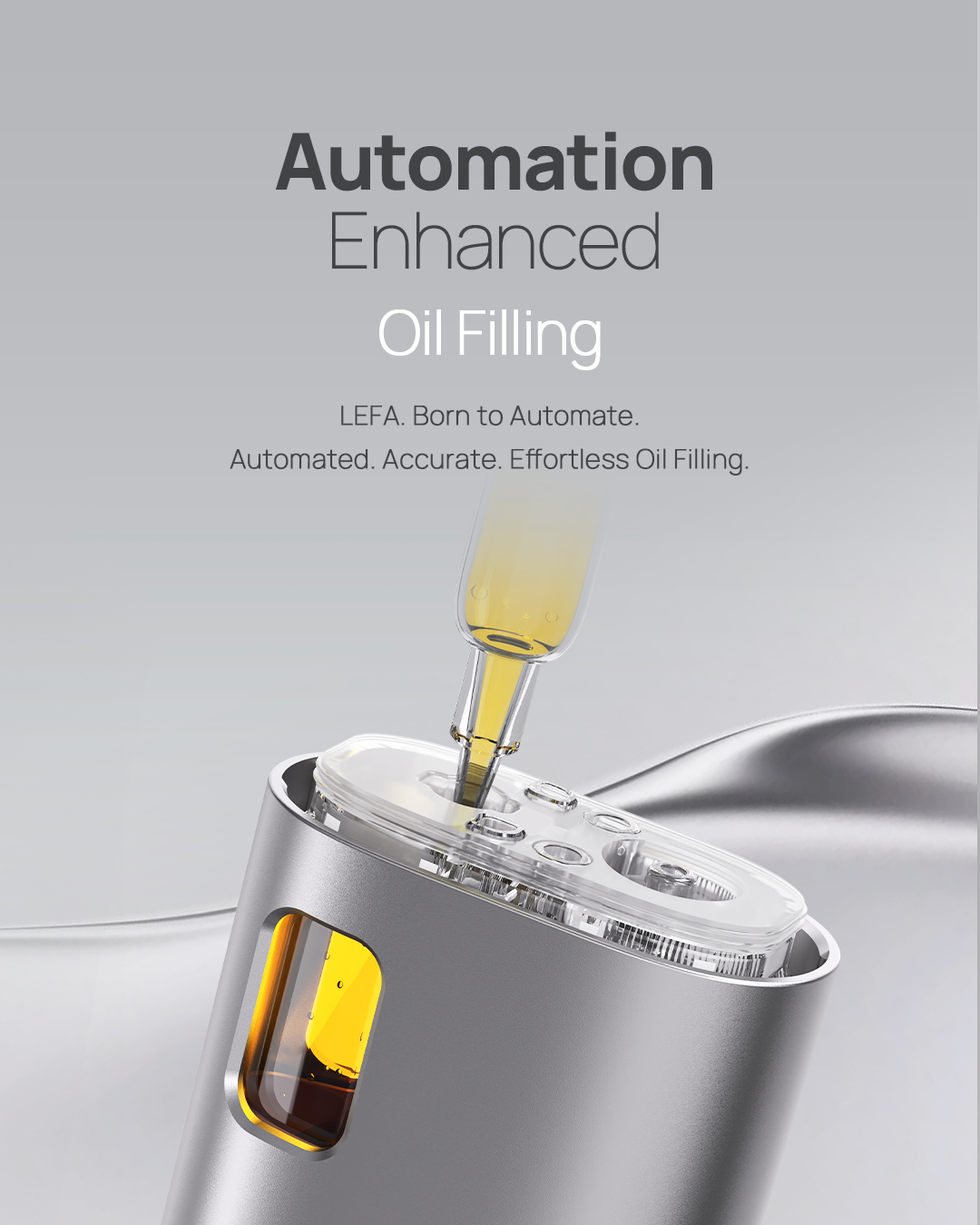
A top opening gives filling equipment relatively direct access to the reservoir. On a well-designed production line, devices can remain in a consistent orientation while oil is dispensed and the upper closure is installed afterward. This can reduce unnecessary turning or repositioning between filling and capping.
The practical advantage becomes more visible as order volume increases. Handling an additional step may seem unimportant during a 20-unit sample run, but repeating it across tens of thousands of units adds labor, line movement, and opportunities for variation.
Bottom-fill designs can still work effectively when the production process and tooling are built around them. The real purchasing question is therefore not which structure sounds more modern, but which one fits the planned filling workflow with fewer unnecessary operations.
How Does Filling Structure Affect Production Efficiency?
Production efficiency is not determined by filling speed alone. A fast dispensing machine provides little benefit if operators must repeatedly reposition devices, clean oil from contact surfaces, or correct misaligned closures after filling.
For larger cannabis brands and contract fillers, the relationship between the hardware and the filling line deserves attention before an order is finalized.
Device Orientation Matters More at Scale
When devices can remain upright through filling and capping, production layouts are generally easier to organize. Consistent orientation can also make tray design and automated handling more straightforward. With bottom access, additional movement may be necessary depending on the hardware and equipment.
Buyers planning automated production should ask whether the selected hardware is compatible with their existing fixtures, nozzles, capping method, and cycle sequence. The filling and capping technology used by the supplier is also relevant because hardware designed with automation in mind may require fewer adjustments when production volume grows.
Filling Temperature and Oil Behavior Still Need to Be Controlled
Top-fill hardware does not remove the need to control the oil itself. Thick cannabis formulations may need carefully managed filling conditions so that dispensing remains repeatable and the oil settles correctly into the reservoir.
Operators should avoid assuming that a larger opening automatically solves filling problems. Oil viscosity, nozzle size, dispensing speed, fill volume, and the time between filling and capping all influence the final result. For high-value extracts, small amounts of oil left on the nozzle, reservoir edge, or fixture can become meaningful waste over a large batch.
Does Top-Fill Hardware Reduce Oil Waste and Filling Errors?

It can reduce some handling-related risks, but the filling direction alone does not guarantee lower waste. Reservoir geometry, nozzle alignment, dispensing control, and operator technique still matter.
What top-fill architecture can offer is a more direct filling path, which may make it easier to position the nozzle correctly and observe the oil level before closure.
Filling Accuracy Should Be Evaluated as a Process
Buyers often compare the nominal tank capacity—such as 0.5mL, 1.0mL, or 2.0mL—while paying less attention to how consistently that volume can be filled in production. For cannabis brands, this matters because the oil often represents a significant portion of the finished product value.
A useful production trial should measure more than whether the reservoir looks full. Teams should record the target fill, actual filled weight or volume, visible oil remaining around the opening, and whether the capping process displaces oil after filling.
A simple comparison can help during hardware evaluation:
| Evaluation Point | Top-Fill Hardware | Bottom-Fill Hardware |
|---|---|---|
| Reservoir access | Usually direct from upper opening | Access from lower assembly |
| Device repositioning | Often limited | May require additional handling |
| Visual fill inspection | Generally straightforward | Depends on structure |
| Automation planning | Can support linear fill-and-cap workflows | Depends heavily on fixture design |
| Oil-contact cleanup | Depends on nozzle and filling control | Depends on lower sealing process |
| Best choice | Based on production workflow | Based on production workflow |
The table should not be treated as a universal ranking. A well-designed bottom-fill device can outperform a poorly designed top-fill one if the entire production system is better matched.
What Sealing and Capping Issues Should Buyers Check?
The filling opening eventually has to be closed, which means the sealing stage deserves as much attention as the filling stage. Poor alignment, unsuitable capping force, damaged seals, or oil contamination around the closure area can affect finished-device consistency.
This is especially important when brands move from hand-filled samples to automated or semi-automated production.
Capping Force and Alignment Need Repeatability
A closure that feels secure when pressed manually may behave differently when thousands of units are capped mechanically. Excessive force can affect components, while insufficient force may leave the closure outside its intended position. The acceptable condition should therefore be defined before mass production begins.
After filling, devices should also be allowed to stand under controlled conditions so that leakage or seepage can be identified before packaging. Buyers reviewing OEM capabilities can look for processes such as post-filling standing tests and in-process quality control rather than relying only on a finished sample inspection.
Oil on the sealing surface deserves particular attention. If filling creates residue around an area needed for closure, capping consistency can become more difficult. That is another reason nozzle positioning and dispensing control should be tested together with the hardware structure.
How Should Cannabis Brands Choose Between Top-Fill and Bottom-Fill Hardware?
The decision should start with the production environment rather than appearance. A hardware sample may look easy to fill by hand, but the important question for a growing brand is whether the same process remains practical at commercial scale.
Brands should compare the structure using their actual formulation, filling method, planned volume, and production equipment.
Use a Production Trial Before Approving the Hardware
A useful pilot run should reproduce the intended workflow closely enough to expose handling problems. Teams can monitor filling speed, oil loss, capping consistency, operator interventions, visible contamination, and post-filling leakage. If automation is planned later, fixture compatibility should also be discussed before tooling decisions are locked in.
Before approval, buyers can use this checklist:
- Confirm the commercial oil and target fill volume.
- Review filling temperature and nozzle requirements.
- Check whether devices can remain in one orientation through filling and capping.
- Record filling variation across multiple units.
- Inspect the sealing area before closure.
- Verify capping alignment and consistency.
- Perform post-filling standing checks.
- Confirm compatibility with future automated production.
The objective is not to prove that top-fill or bottom-fill is universally better. It is to identify which structure removes unnecessary production steps while maintaining stable filling and sealing for the specific cannabis product.
How Does Nextvapor Support Cannabis Vape Filling Projects?
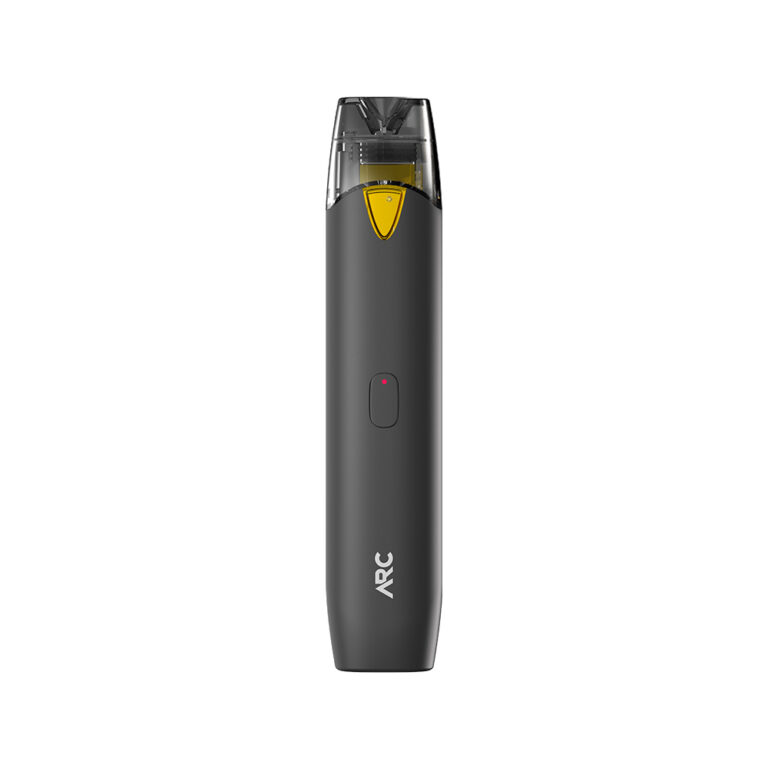
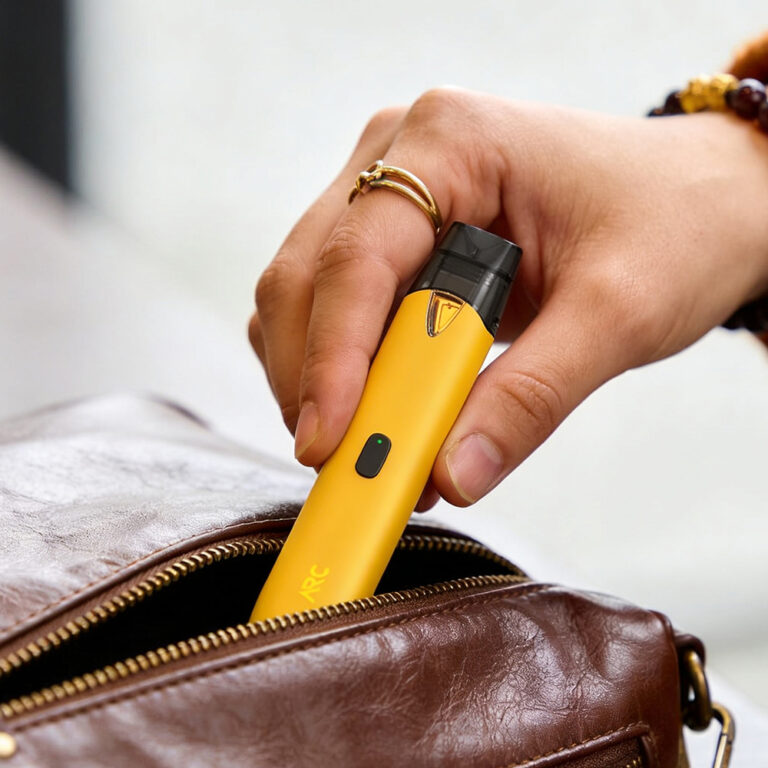
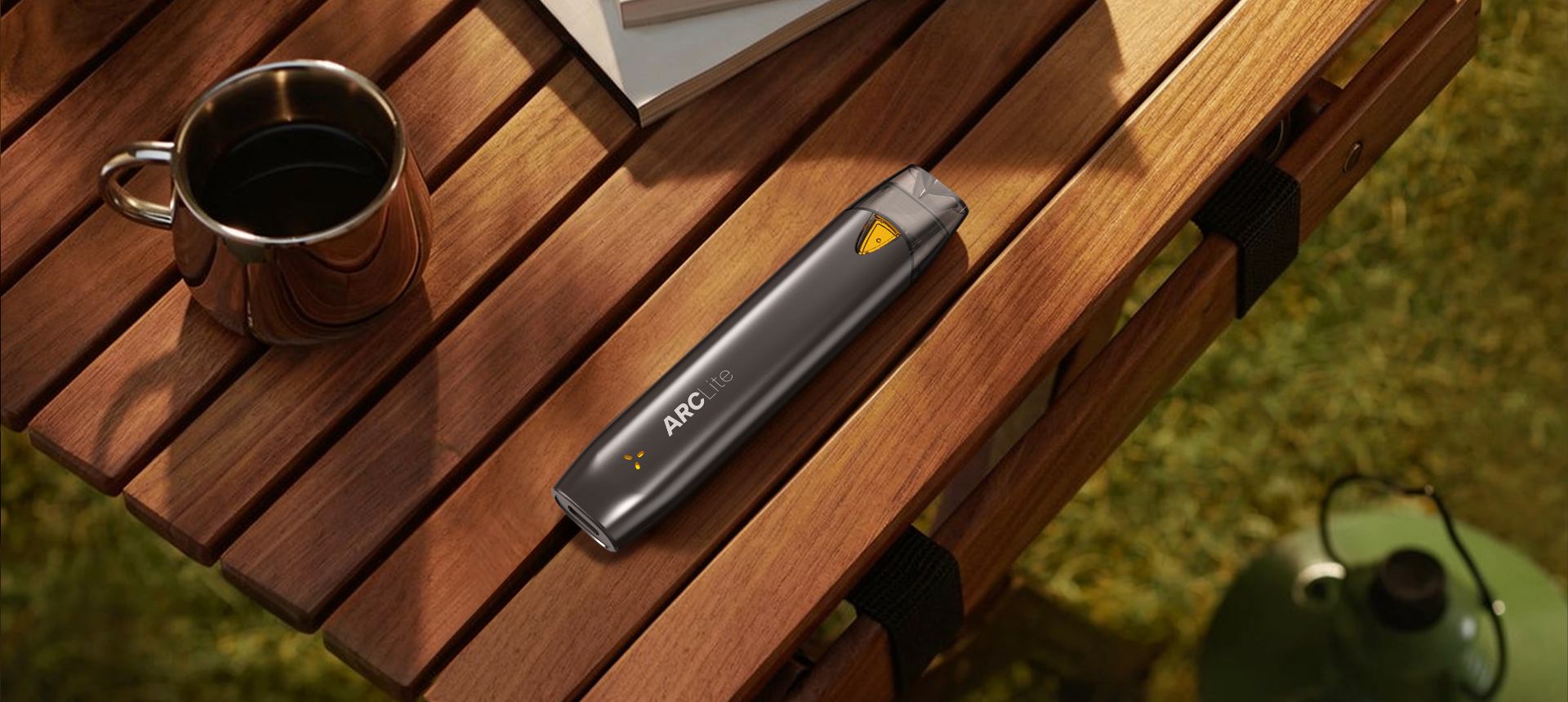
Nextvapor develops cannabis vape hardware for OEM and ODM projects in which device architecture, oil filling, capping, and production scalability need to work together. Its hardware portfolio includes platforms with production-oriented filling structures, while its manufacturing capabilities also cover filling, capping, and in-process quality control. Brands evaluating a top-fill format can review the ARC cannabis vape hardware as one available hardware platform and then validate the selected configuration with their own oil, filling conditions, and production requirements.
Conclusion
Top-fill cannabis vape hardware can simplify reservoir access and reduce unnecessary handling, particularly when brands plan higher-volume or automated production. However, filling direction alone does not determine production quality. Oil viscosity, nozzle setup, filling accuracy, capping force, sealing cleanliness, and post-filling inspection remain equally important. Before approving a device, cannabis brands should run a realistic production trial and judge the hardware by the complete fill-and-cap workflow rather than by sample convenience alone.
FAQs
1. Is top-fill cannabis vape hardware better than bottom-fill hardware?
Not in every case. Top-fill designs can simplify access and handling, but the better choice depends on the oil, filling equipment, device structure, production volume, and capping process.
2. Does top-fill vape hardware reduce oil waste?
It may reduce handling-related waste when nozzle access and filling control are well designed. Actual oil loss still depends on dispensing accuracy, oil viscosity, reservoir geometry, and operator or machine setup.
3. Is top-fill hardware suitable for automated filling?
Many top-fill structures are compatible with linear filling and capping workflows, but buyers should confirm fixture, nozzle, device orientation, and capping compatibility before committing to automated production.
4. What should brands test during a vape filling trial?
Brands should record fill accuracy, filling speed, oil residue, capping consistency, device handling, leakage after standing, and any operator intervention required during the intended production process.
5. Why is post-filling testing important for cannabis vapes?
Some sealing or leakage issues do not appear immediately after capping. A controlled standing period helps production teams identify seepage, closure problems, or other changes before devices enter final packaging.